By Dr. Don Bierle, FaithSearch President

In the last issue of this newsletter, I emphasized the perfection of Jesus – “For in Him all the fulness of Deity dwells in bodily form” (Colossians 1:15; 2:9). While the fact that Jesus is fully God is the truth most frequently denied by cults and false teachers, there is also an opposite heresy concerning Jesus. “Docetism” states that Jesus was not a man in reality, but only in appearance. This is similar to so-called “theophanies” where angels appeared in the form of men. Docetism is a denial of the true humanity of Jesus Christ, claiming He is only a spirit being feigning flesh.
Really?!
A denial of the physical humanity of Jesus Christ is a denial of the historicity of the New Testament, for it is flush with references to years of detail regarding His physical life on earth.
It is not even conceivable that Joseph and Mary, the shepherds, the wise men, even the Temple attendants Simeon and Anna, and for that matter, Herod the Great, would mistake the child born in Bethlehem as a theophany (Luke 2:1-38; Matthew 2:1-16). Furthermore, people observed His life over years of development (“And the child continued to grow and become strong, increasing in wisdom; and the grace of God was upon Him” Luke 2:40).
Neither is it conceivable that a theophany would be recognized as a “hometown” boy as was Jesus:
- “…and He continued in subjection to them [His parents] (Luke 2:51)
- “And He came to Nazareth where He had been brought up…” (Luke 4:16)
- [The people said], “Is this not Joseph’s son? …what we heard was done in Capernaum, do here in your hometown as well” (Luke 4:22-2)
- [But Jesus said], “…no prophet is welcome in his hometown” (Luke 4:24)
In addition, these facts can only be true of a man with years of actual history:
- His age was known – “And when He began His ministry, Jesus Himself was about thirty years of age…” (Luke 3:23)
- people throughout Palestine knew He was a Galilean – “…we know where this man is from”; “Surely the Christ is not going to come from Galilee, is He?” (John 7:27; 41)
- the details of His family are documented – “Is not this the carpenter, the son of Mary, and brother of James, and Joses, and Judas, and Simon? Are not His sisters here with us?” (Mark 6:3)
Finally, theophanies do not:
- weep (“Jesus wept” John 11:35)
- eat (“And they gave Him a piece of a broiled fish; and He took it and ate it in their sight” Luke 24:42-43)
- have flesh and bones (“See My hands and My feet, that it is I Myself; touch Me and see, for a spirit does not have flesh and bones as you see that I have” Luke 24:39-43).
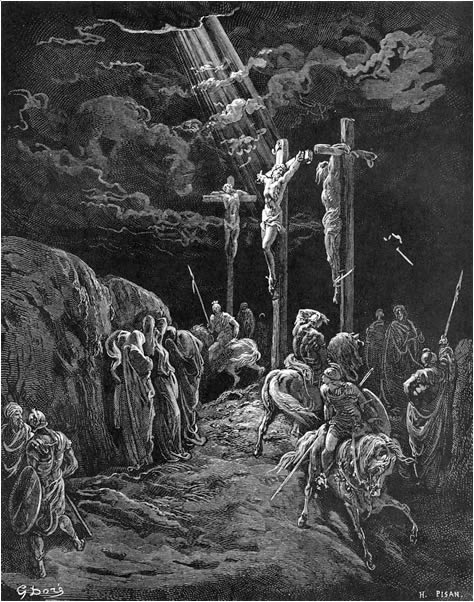
Finally, it may go without saying: theophanies (who have no physical bodies) cannot be crucified! (Luke 23:33).
The textual evidence is clear – Jesus Christ is the God-Man. How can some people think otherwise?
The Apocryphal Writings
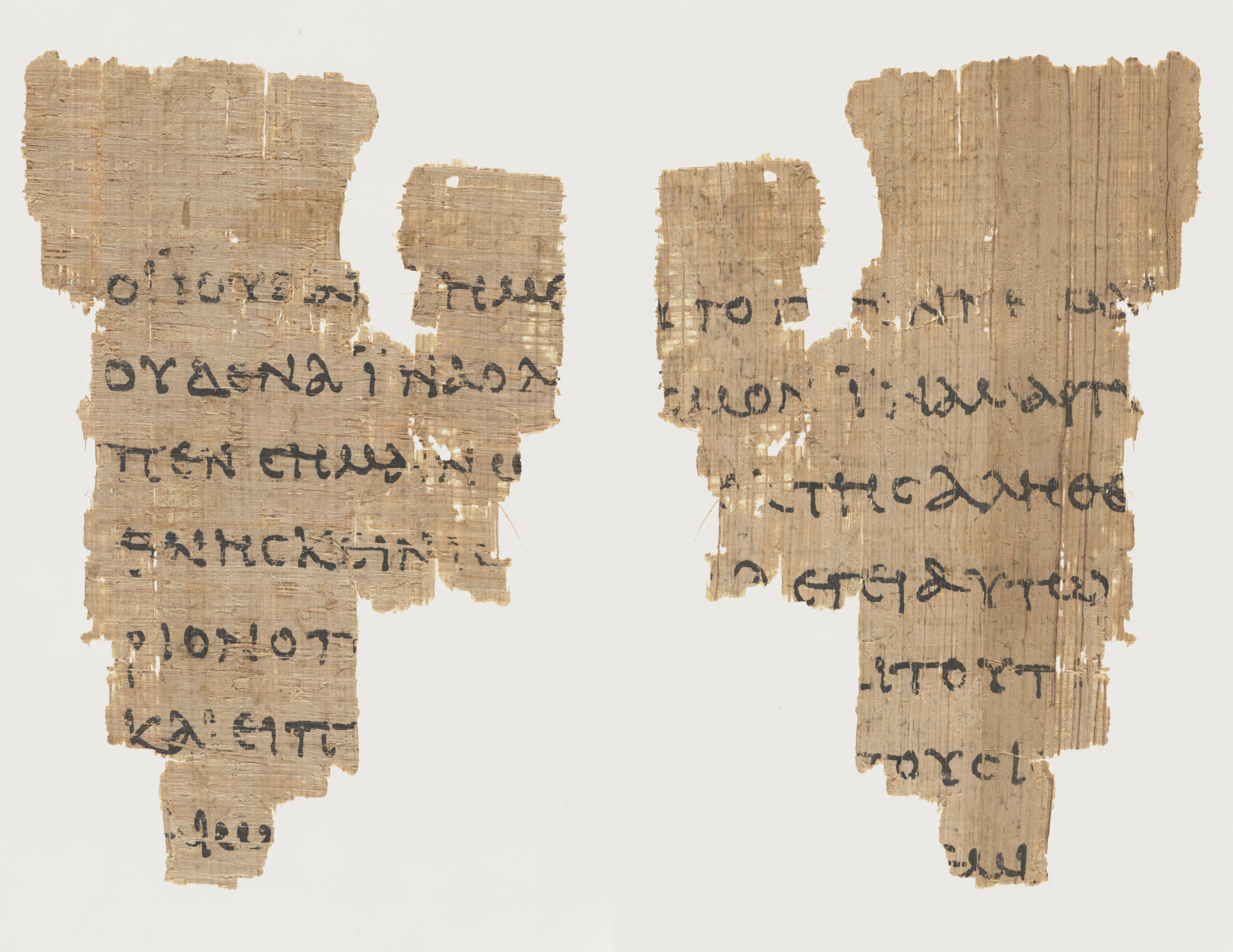
Some of the rationale for docetism must certainly come from later, legendary accounts about Jesus. For example, the recent discovery of a papyrus fragment of the Infancy Gospel of Thomas was published in Biblical Archaeological Review (BAR).
In that apocryphal “gospel,” a five-year-old Jesus is reported to have cursed another child who then fell over dead. This child Jesus also causes the members of His village to go blind. The fragment further recounts the child Jesus making clay sparrows on the Sabbath (forbidden!) and then transforming them into living birds to avoid blame for violating the Sabbath.
Another apocryphal writing, The Acts of John, says the following about Jesus:
Sometimes when I meant to touch him I met with a material and solid body; but at other times when I felt him, his substance was immaterial and incorporeal, as if it did not exist at all…And I often wished, as I walked with him to see his footprint, whether it appeared on the ground, and I never saw it.
These writings either make the child Jesus as a “circus side-show” or question his humanity.
The Evidence of the Origin of the New Testament Gospels
Why believe the history of Jesus as recorded in Matthew, Mark, Luke, and John, and not the accounts in the Infancy Gospel of Thomas?
It can be demonstrated from early manuscript studies that the biblical Gospels were written by eyewitnesses of Jesus in the first century. The author Luke states that he “investigated everything carefully from the beginning,” having consulted the eyewitnesses of Jesus (Luke 1:2-3).
First century enemies of the early Christian writers (who were themselves also eyewitnesses to the life, actions, and words of Jesus) could have challenged the Gospel accounts, if they had deviated from their own observations and experience. But they did not.
On the other hand, the infancy gospel was not written until at least 150 years later and was pseudepigraphal (falsely ascribed to Thomas, who would have long been dead!). The heretical author could imagine and make up anything because he/she lived long after the time of Jesus. There were by then no living eyewitnesses to set the record straight.
Discovery
For a more complete video presentation of the historical reliability of the canonical Gospels, visit our Bible Learning Center for our FREE flagship presentation on this subject (Discovery). You can also request a copy of my book, Surprised by Faith, which includes an entire chapter on the historical evidence for the biblical Gospels.
Sources: “Early Infancy Gospel Discovered; Christianity’s First Family”; Biblical Archaeology Review, Winter 2024, pp. 17 and 70-71.